Wasp eradication in the Bend
As part of BICA’s intention of restoring and protecting our local ecosystem, in 2025 we decided to tackle the worrying European wasp situation in the Environmental Living Zone located in Melbourne.
It’s been a steep learning curve for BICA members participating in our first year of the wasp eradication project. This year has been an unusual wasp year, (according to social media sites) as activity started a month later than usual, and it’s been erratic in the Bend, some areas, particularly by the river, have been very busy, but other areas, not so. It may be because we obliterated around 40 queens last year. European Wasp Control Project is a great site: https://www.facebook.com/groups/927515897312332/
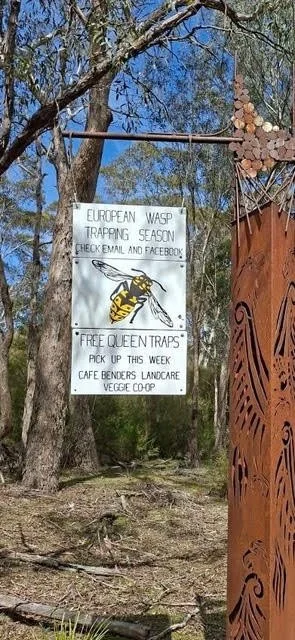
There are three ways we attack wasps. Firstly, by finding the nest and killing it, which is very satisfying, but not always possible in the Bend of Islands. Secondly, we trap and drown the queens as they come out of hibernation with the warming weather, using a fermented yeast and sugar mixture. Then, thirdly, once the nests are established and the workers are looking for protein to feed the pupae, we use bait stations which enable the wasps to take the bait, return to the nests and share the poison around. At the end of summer as the weather is cooling and the queens begin to look for safe, over-wintering hibernation hiding places, the fermented yeast and sugar comes out again.
The queen wasps are usually solitary and need to be cruising by a trap to be attracted in, unlike workers who are actively seeking a food source to take back to the nest and tell their friends. Catching queens may not be instant – so we need to leave the trap out and be patient. Seeing results is never instant and may take a few weeks. This time of year (Autumn), both protein baiting traps and liquid queen traps together can be placed in the environment and the queen traps need to be monitored, any bodies strained out and then reuse the strained liquid.
There are several different types of bait mixes, and it seems that wasps are fussy creatures. What they’ll eat one week, they’ll refuse the next. We’re still experimenting with different types of traps, and different types of baits, ever mindful of the safety of small creatures who might want to investigate, as boric acid will kill small mammals like phascogales and antechinus.
Research tells us that one wasp colony can consume up to 100 kg of insects in a season, attacking insects and invertebrates: caterpillars, flies, spiders, honeybees etc. High wasp numbers can reduce native invertebrate populations to near zero. Each queen can birth about 5000 workers. Towards the end of summer, a new generation of queens develop. They leave the old nest, mate, and find a safe spot to hibernate over winter.
In Australia, unlike in Europe, the old queen may stay in the nest and continue to lay eggs, resulting in massive nests with over 100,000 wasps. They compete directly with native birds, lizards, and insects for food, particularly honeydew, and can monopolise carrion. Their intense predation and competition pressure significantly reduces native insect biodiversity and population. Lizards, frogs, birds and flora reliant on specific insect pollination methods all suffer.
Even intact rainforests are reporting massive loss of insect life now. Estimates vary, but it’s reported that there has been up to 75% loss of insects over the last few decades, through climate change and ecosystem degradation. Remember driving long distances and having to stop to clean the windscreen of dead insects so you could see out? No longer…we need to protect our insects, and one way that we can is to get rid of the wasps.
Most wasp eradication solutions use a Fipronil-laced bait to target the nests, which works quickly and effectively. However, we don’t want to use Fipronil, given the horrendous, long lasting and accumulative impact it has on the environment; its derivatives are found now in the cord blood of newborn babies. Research has shown that Fipronil is taken up by plants, showing up in pollen and nectar. It’s now banned in the European Union, UK, China, Vietnam and California USA. It is still used in Australia for specialised pest control for fleas and termites.
Because of this, we’re trying bait laced with boric acid, which is effective, but slower acting and its impact harder to gauge. More news to come in this ongoing project.