

Orchids

Duck Orchid

Beard Orchid
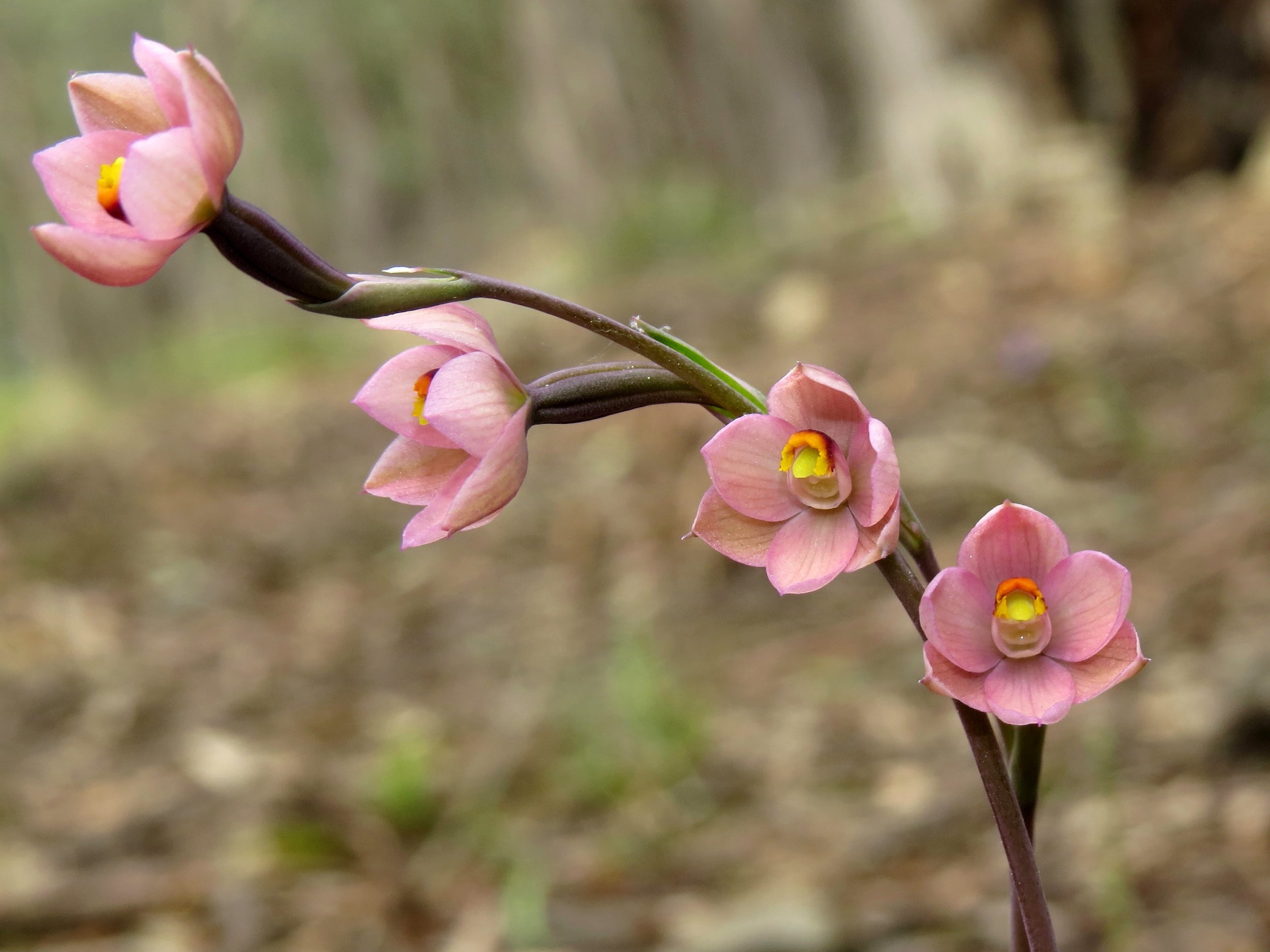
Salmon Sun Orchid

Clubbed Spider Orchid (Plain-lip)
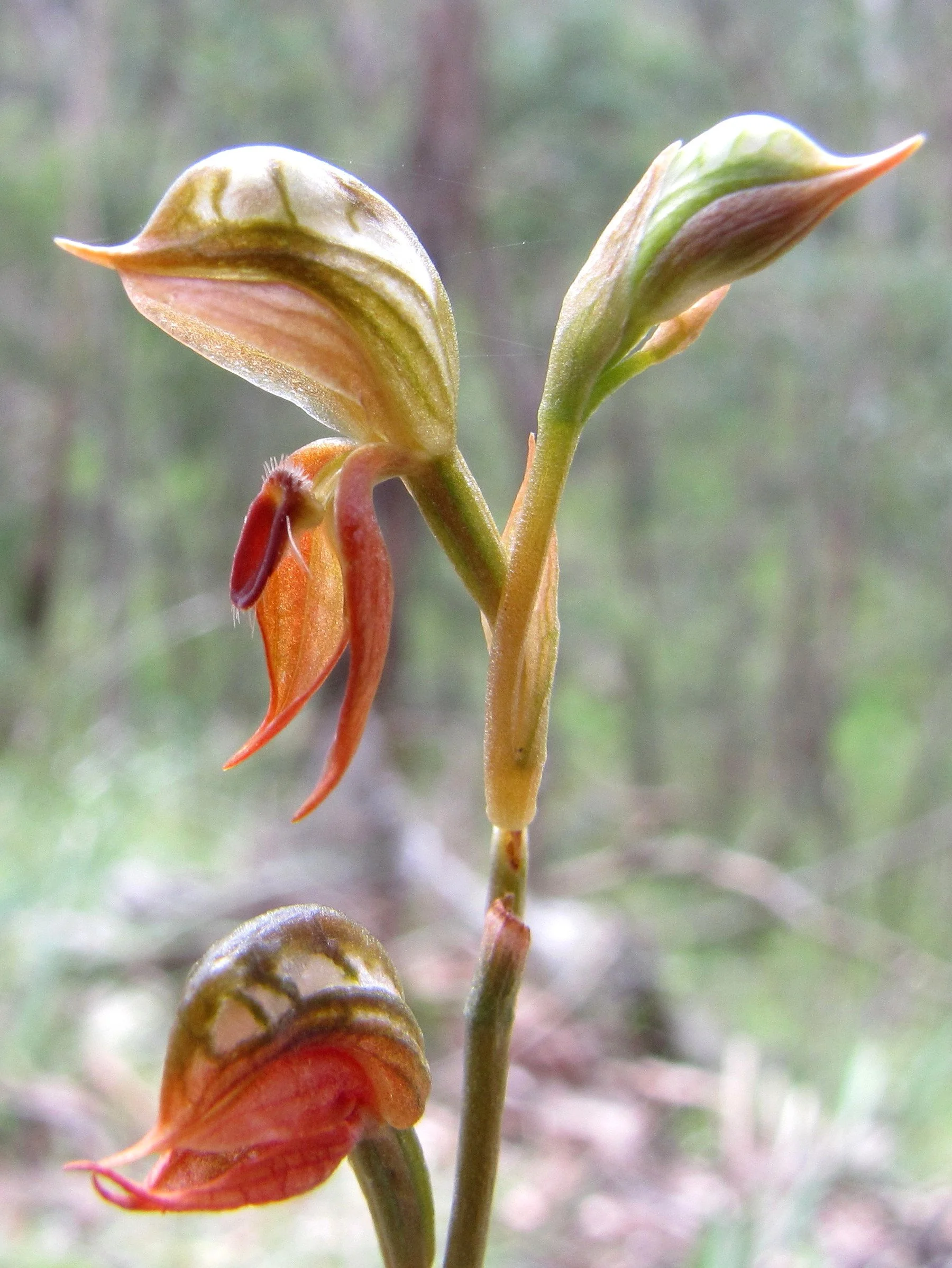
Ruddyhood Orchid
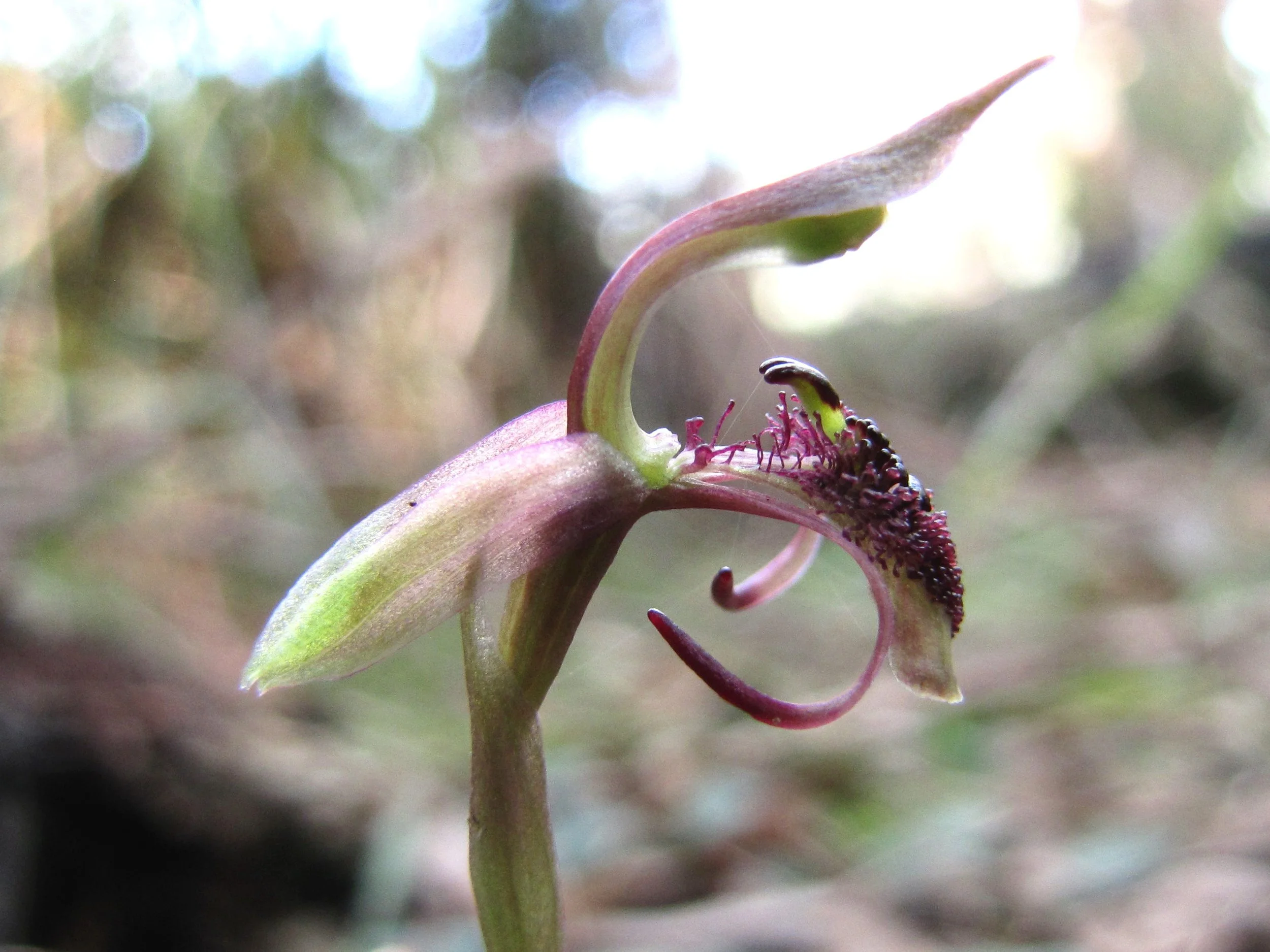
Bird Orchid
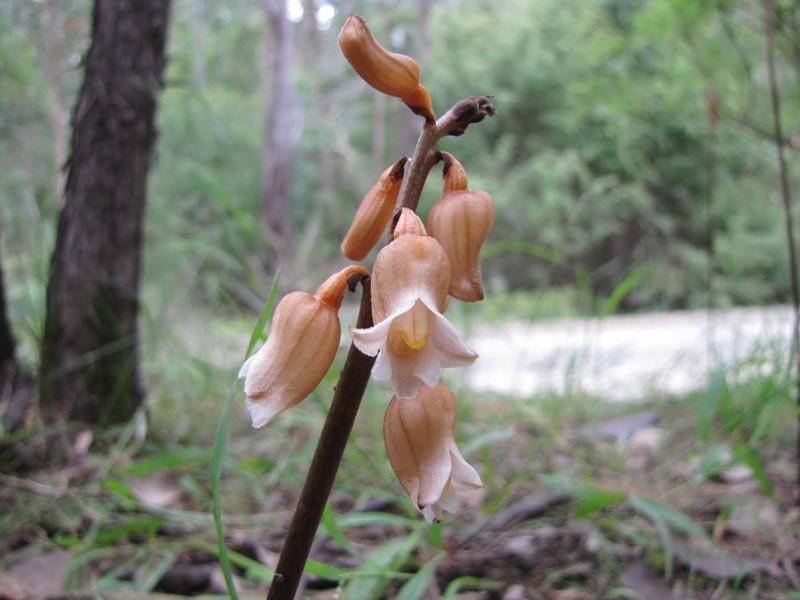
Potato-orchid (Cinnamon Bells) - Gastrodia sesamoides
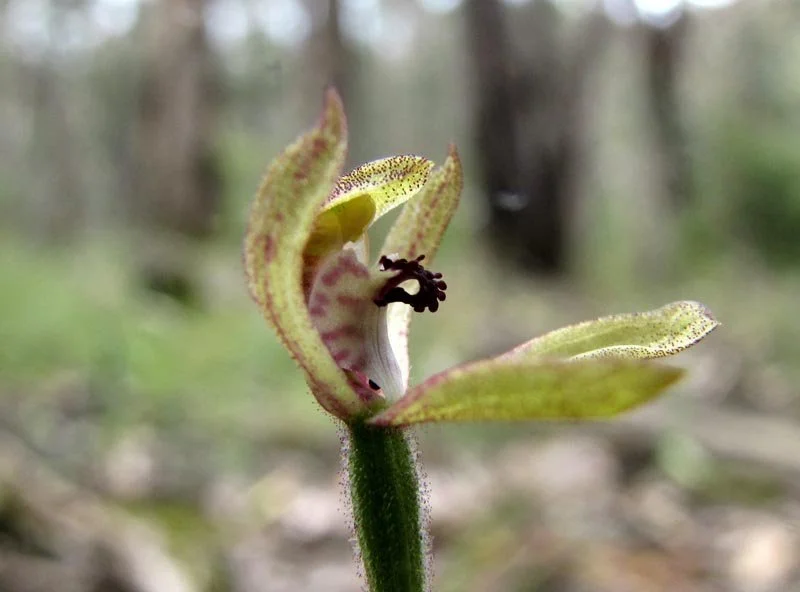
Green Caps (Bronze Caladenia) - Stegostyla transitoria
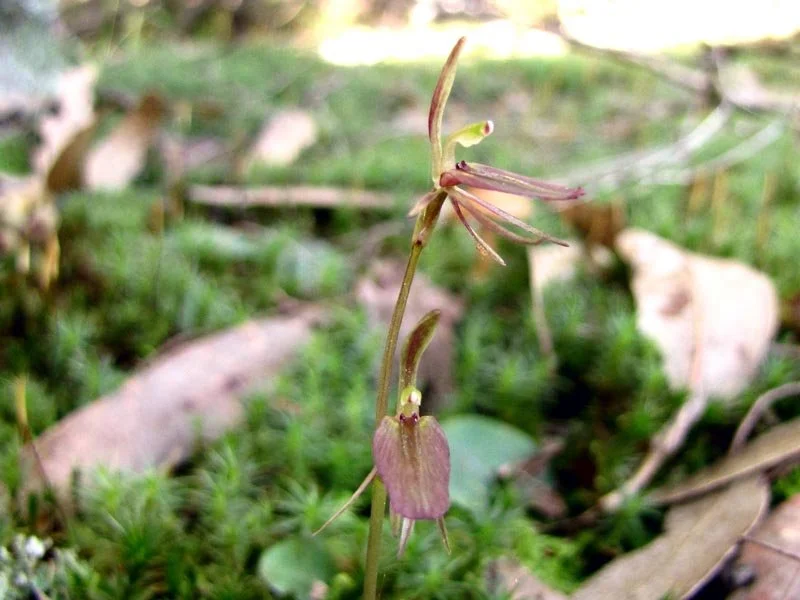
Common Gnat Orchid - Cyrtostylis reniformis
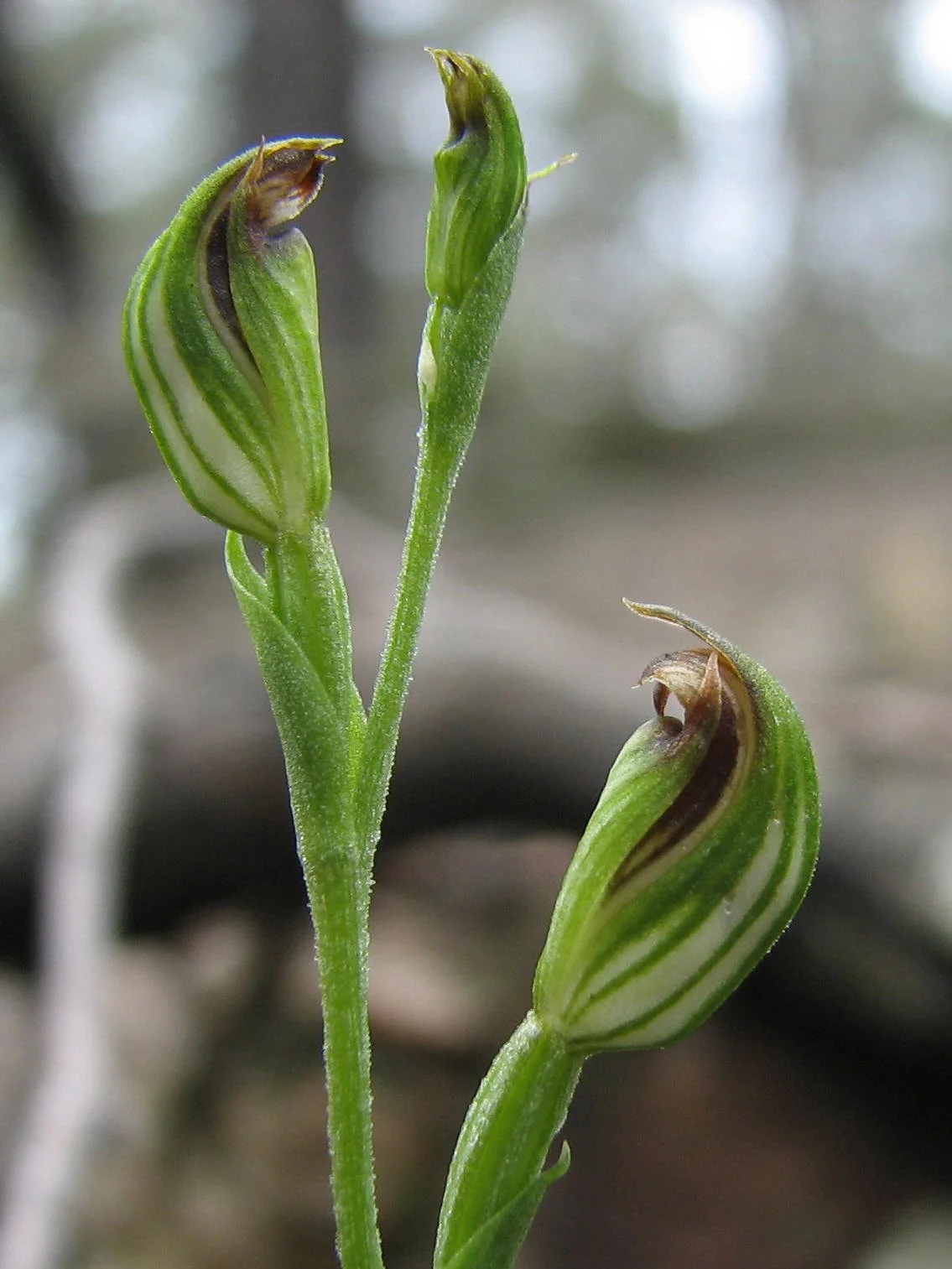
Red-Tip Greenhood Orchid
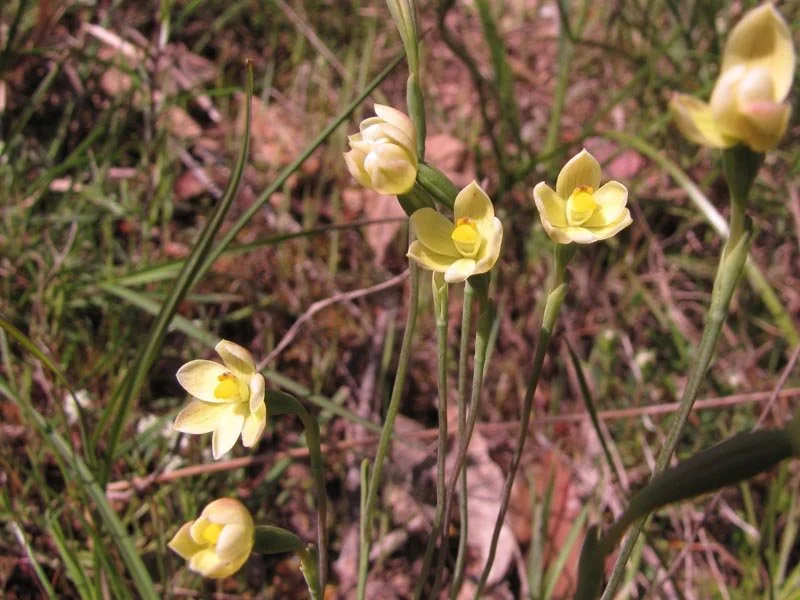
Twisted Sun Orchid - Thelymitra flexuosa
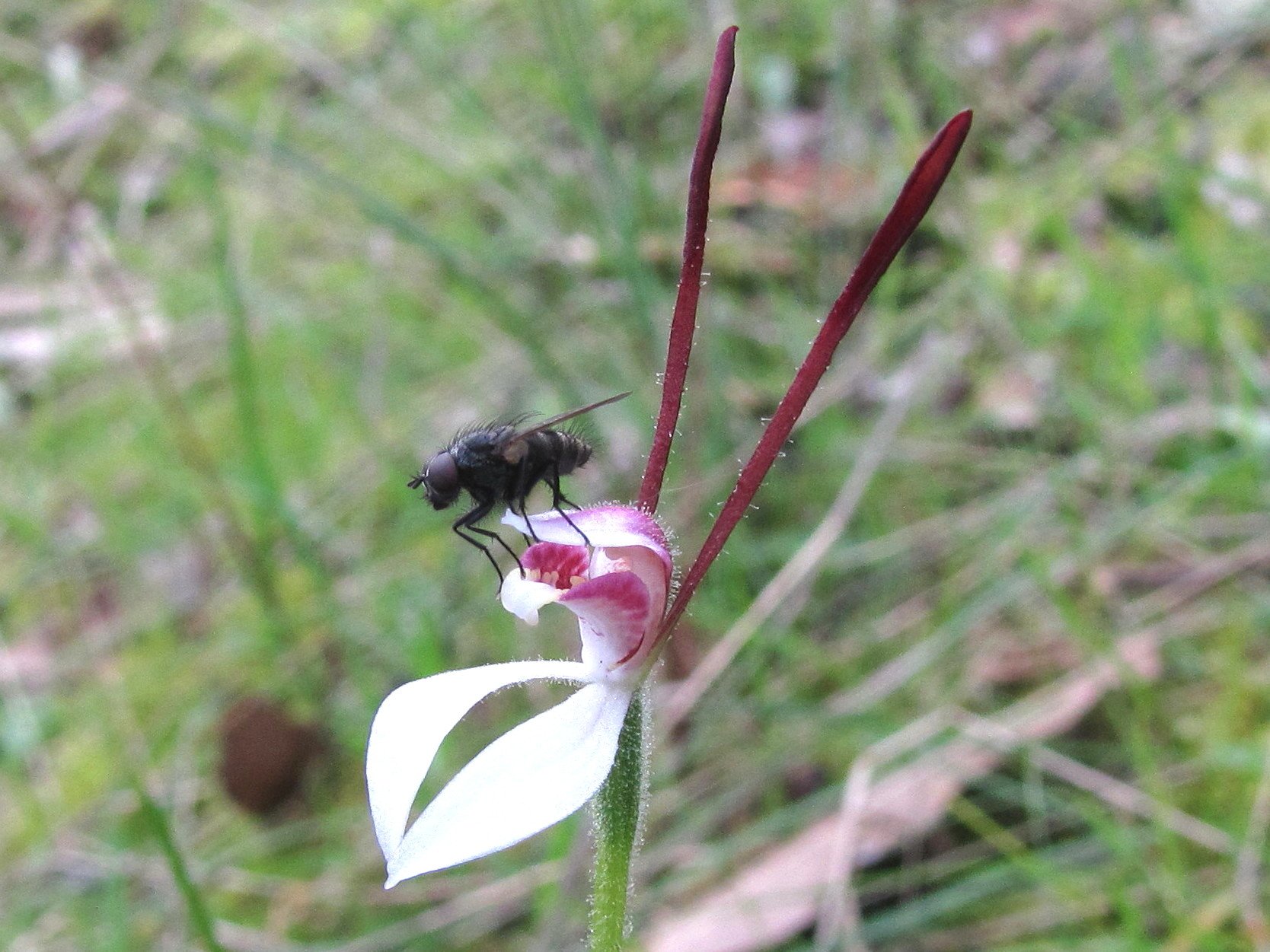
Hare Orchid
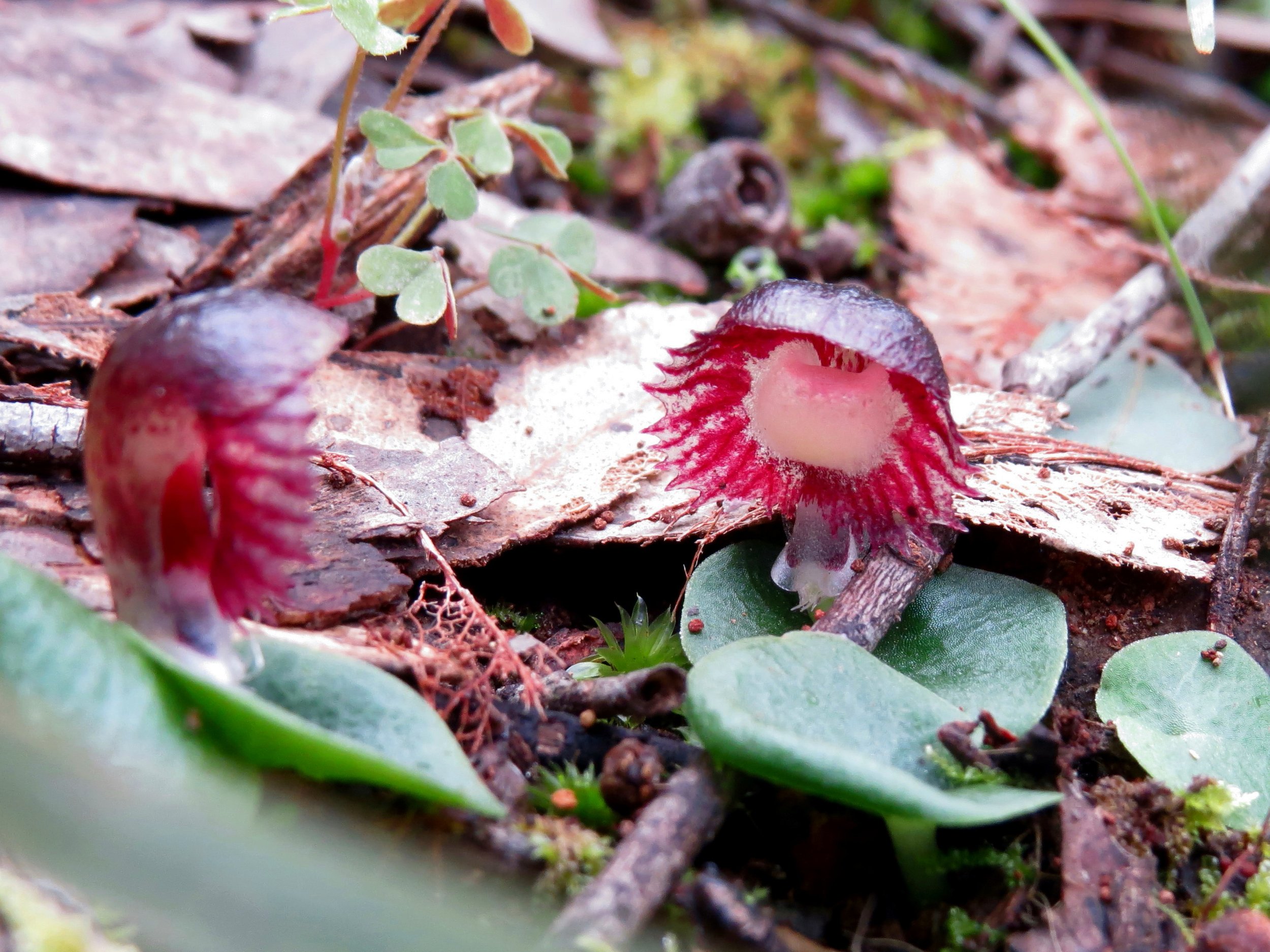
Helmet Orchid
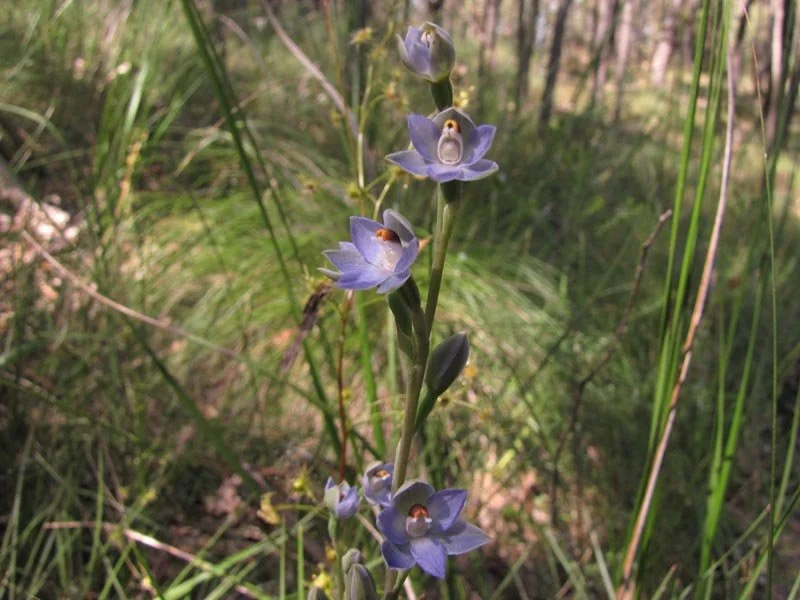
Peppertop Sun Orchid - Thelymitra brevifolia

Dainty Bird Orchid
Quicklink:
Our native orchids are truly fascinating. They are so easily overlooked yet when noticed and closely inspected their delicacy, structure and colours are astonishingly beautiful. They are a great gateway to the world of ‘macro-nature’. They get us on our knees and into the world of the spiders, insects and other plants that live close to the earth, ‘below knee-height’.
The ELZ is ‘orchid rich’ although it takes a lot of searching to appreciate the full extent of this richness. Most species only appear for a fleeting few weeks a year. Many reappear in the same location each year, others are much more elusive.
Searching for orchids is a great excuse to explore the wonders of our beautiful area. Any time you go out, if you don’t find an orchid, you are sure to find something else to fascinate you such as a wildflower, an insect that may acting unusually or some strange fungus.
Recording Orchids in the ELZ
The ELZ Orchid List has been compiled from all known previous records in the ELZ. The list is based in the taxonomy currently accepted in Victoria. The comprehensive revision of Australian orchid taxonomy presented in Jones 2006 has not been accepted in Victoria but is included in the list, to facilitate use with references that have adopted it.
The list is presented in 2 separate single-page formats for alphabetical listing of Common Names and of Scientific Names. It has the following features: -
reference to the species numbers of both the Co-op Orchid Book and the HEROG
the number of times each species has been recorded in each month since 2012 to give a good indication of flowering time and rarity
set out for easy recording of monthly observations of each species throughout the year.
Intended to be up-dated at the end of each year.
The Work of Dean Rouse
We are indeed lucky that Dean Rouse, in his youth, combed the Co-op and surrounding area in the 1980s with his grandmother, Hazel Rich, who was a member of the Co-op. Dean’s photographs of more than 50 species were donated to the Co-op to form the basis of the Field Guide to the Orchids of Round the Bend Conservation Co-operative, produced in 1999. Since then, a small group of local enthusiasts have been searching the area, trying to find the species listed. In doing this we have found a few others to add to the list.
In 2007 Dean produced the Hazel Easter Rich Orchid Field Guide dedicated to his grandmother Hazel Rich, who passed away in 2006. The guide is based primarily on the orchid lists for Round the Bend Conservation Co-operative compiled by Hazel and Dean, and the list for One Tree Hill Reserve compiled by Cam Beardsell. Other orchid species with highly restricted distributions within the Christmas Hills region are also listed in the guide. Dean has generously donated this guide for future use by the Co-op and BICA. All material remains the copyright of Dean Rouse.
BICA and the Co-op thank Dean Rouse for his generous gift of this document and for sharing his knowledge of our local orchids.
Suggested Identification Strategy when you come across an unfamiliar Orchid.
The initial challenge is to find an ‘approximate identification’ to narrow the field of likely contenders for more detailed assessment.
Take some photos to capture the main elements of the plant
Flower details from different angles
Labellum
Leaves
Overall plant
Note plant details - size of flower, height of plant, any particular features that are unusual
Record the location, to the extent that you are sure that you will be able return and find it
Option 1
Take photos on your smart phone and try one of the AI apps (e.g. the ‘Lens’ feature in Google Photos)
Option 2
If you have internet access in the field
go to ELZ Orchid List to see all the likely contenders and usual flowering times.
then go to Yarra Ranges Local Plant Directory which has most of the ELZ species.
Scroll through the thumbnail photos (5 pages) until you find a match for your plant
Open the species page and check the photos and details with the plant you have found
If you want to check more details then go to link to the Flora of Victoria Orchid page
Click ‘Child’ link and select the Genus from the list
Click ‘Select Child’ link and select the Species from the list
Check text or click on ‘images’ link to see photos
If you do not have internet access in the field
Double check that you have sufficient photos and location details
Go through the process above, when you have internet access
If this process does not lead to a confident identification, you may need to go to some of the more detailed references listed below. Some species, the Sun Orchids for example, require detailed keying out of fine details to obtain a confident ID.
If you are still in trouble, email the details to someone with good knowledge of orchids and hopefully they can help. They may want to see the orchid so make sure you have sufficient details to re-find it.
If anyone finds an unusual orchid, or needs some identification assistance, contact Frank Pierce at jmandfp@bigpond.com as a first step. Referral to others with better knowledge may be required!
Suggested Further Reading:
Jones, D.L. (2006). A Complete Guide to Native Orchids of Australia, Including the Island Territories.
Jeans, J. & Backhouse, G. (2006). Wild Orchids of Victoria.
Backhouse, G. (2011). Spider orchids - the Genus Caladenia and its Relatives in Australia - 2011. DVD available from Gary Backhouse, GaryNelsonBackhouse@gmail.com
More Links
These websites contain many photos that are very useful to aid identification.
Flora of Victoria Website – good detail pages for all ELZ species
Retired Aussies Website – good detail pages for most species with thumbnail summary
Yarra Ranges Plant Directory Website – very good range of photos of all species